
Chapter One, Part Three - What makes a polyculture a polyculture? - Polyculture Market Garden Profile
Regenerative Landscape Design Course

This is the final part of Chapter One - click on the links for Part One and Part Two
What makes a polyculture a polyculture?
The way we manage our land can be understood as a spectrum. At one end lies broad-scale annual monoculture, likely causing the most damage. At the other lies small-scale perennial polyculture, likely offering the most promise for a regenerative system
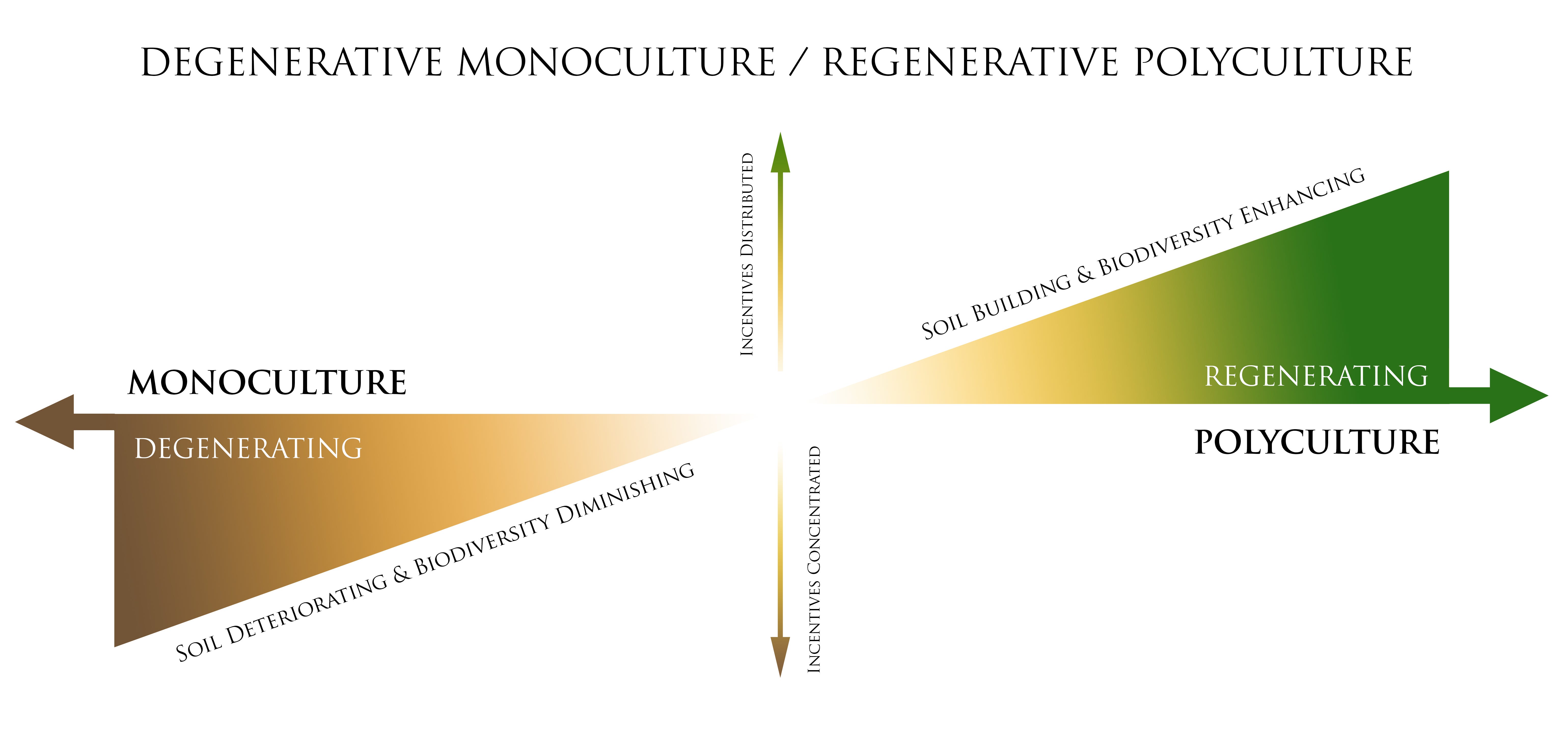
Between these two extremes, there is room for much variation. What would you call the following examples?
An apple orchard growing 10 different cultivars, with one crab apple planted every 100 trees. How many plants and other organisms need to be present for something to qualify as polyculture?
A wheat field sown with 4 different cultivars of wheat. Does variation in genetic material count as polyculture?
Field crops annually rotated: wheat, canola, peas, mustard. Can single crops grown on a piece of land but rotated annually be considered polyculture?
A 100-hectare, 50-year-old Pinus nigra (Austrian pine) plantation inhabited by fungi, deer, and a range of understory herbs. If plants and animals that were not intended to be in the culture establish themselves there, is it polyculture?
A market garden with four adjacent 1m x 20m beds: one planted with carrots, one with cabbage, one with garlic, and one with swedes. What should the distance between patches of the same species be for it to be considered polyculture?
Furthermore, how a culture is managed is also important to consider. If you have multiple species but spray insecticides and fungicides, can that still be considered polyculture? If you remove all the existing vegetation and replace it with hundreds of different species that require intense management and constant attention, is that polyculture?
The approach I believe to be most useful is to define a polyculture by its measurable qualities.
Defining Polyculture by Qualities
A polyculture should bear the following measurable qualities:
Biodiversity Enhancing - Provides long-term habitat for wildlife and measurably enhances biodiversity.
Clean and Safe - Makes redundant the application of ‘icides’ (fungicides, herbicides, insecticides) of organic or non-organic origin
Pleasurable Working Environment - Is pleasant to work in, user friendly and facilitates dignified work
Soil Building - Can show year-on-year measurable increases in soil fertility (particularly soil organic matter and soil microbiology).
Landscape Congruity - Takes advantage of a location’s climatic and geographic properties to decrease energy and resource expenditure, and has a positive impact on the aesthetic qualities of the landscape.
Economic Viability - Can be productive, commercially or domestically, in relation to its cost, producing a reliable yield of healthy, affordable, marketable produce.
These are the essential qualities of a polyculture—and our design goals. Throughout this book, we’ll explore how to bring these qualities to life in our landscapes. How successful a polyculture design is can be assessed by the degree to which it expresses each quality. I don’t pretend to have all the answers on measurement. Instead, consider this an open invitation: to help define how we measure these qualities, so that polyculture as a practice can evolve with rigor and credibility.
Here is profile of Aponia—our polyculture market garden, where we explain how we have attempted to meet these qualities in practice.
Polyculture Market Garden Profile - Aponia
Garden Overview
Location: Bulgaria, Shipka
Climate: Temperate
Köppen Climate Classification - Dfc borderline Cfb
USDA Hardiness Zone: 5b conservative - 7a risky
Latitude: 42°
Elevation: 565 m
Average Annual Rainfall: 610 mm
Prevailing Wind: NW & NE
Area : 2500 m2
Garden Design Objectives: To experiment with annual and perennial polycultures. To try and establish an optimal ratio of wild to cultivated land within a market garden set up, wherein we grow a diversity of high yielding and healthy foods within the wild and semi wild habitats.
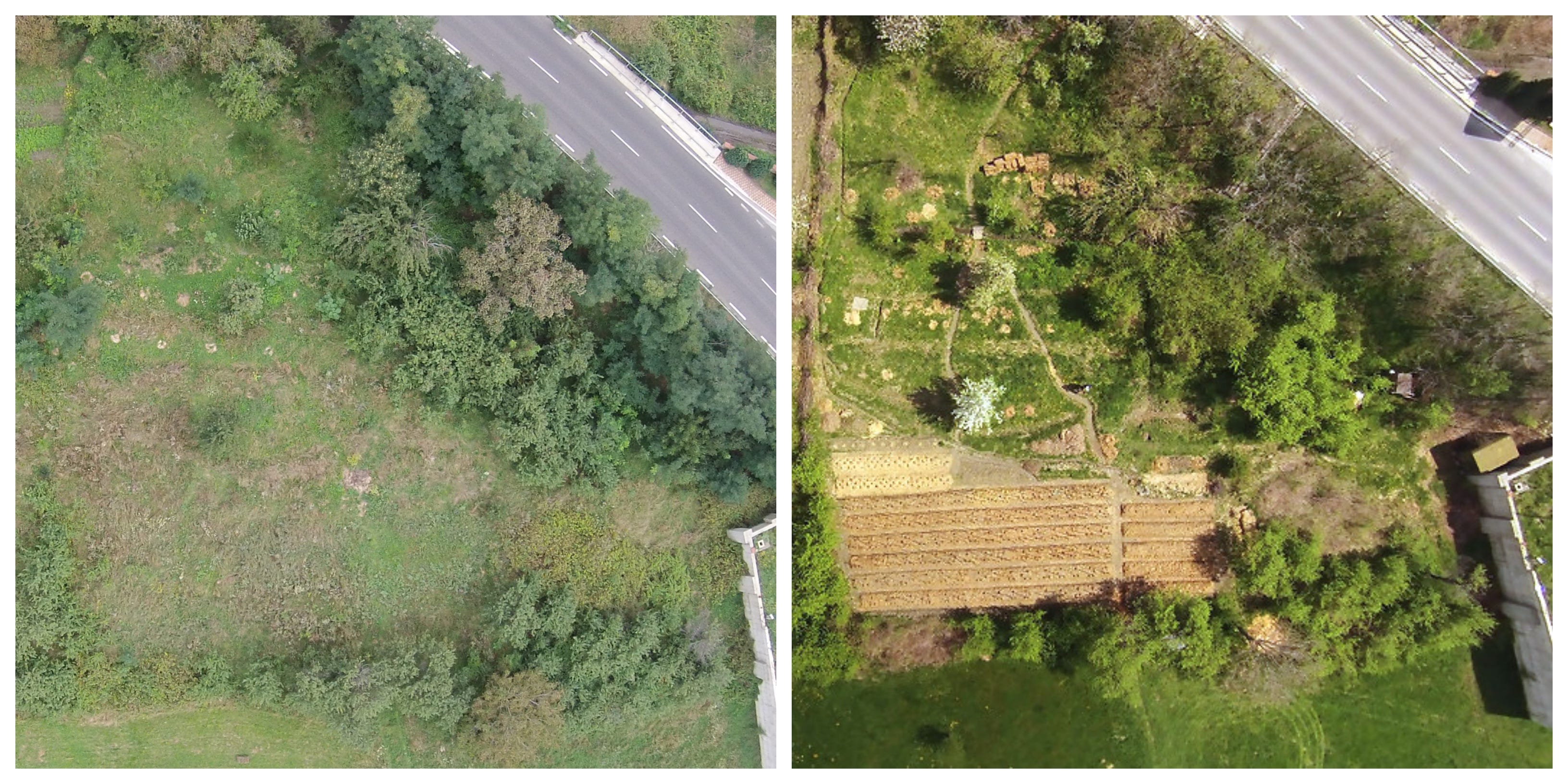
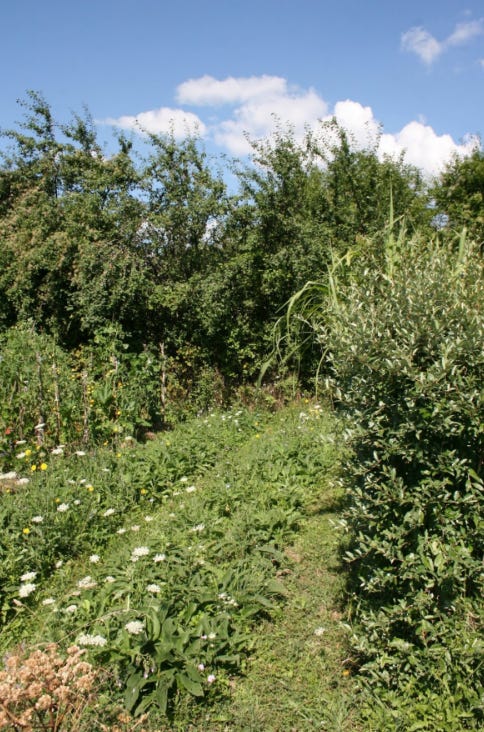
The garden is a short half a km walk away from our home and we probably visit the place 2 -3 times a week during the growing season and once every few weeks during the winter. The garden looks very wild and this is intentional as our aim is to incorporate as many wild plants as possible into the area and see how this can balance with food and other resource production.
Design Overview
Site Development
We took on the plot in 2015. As far I know, the area had previously been used for growing potatoes for a few seasons, after which it had been abandoned for a number of years and was being used for grazing tethered horses up until the point we bought the plot. Having been overgrazed and compacted by the horses, the soil was not in great condition.
Irrigation Plan
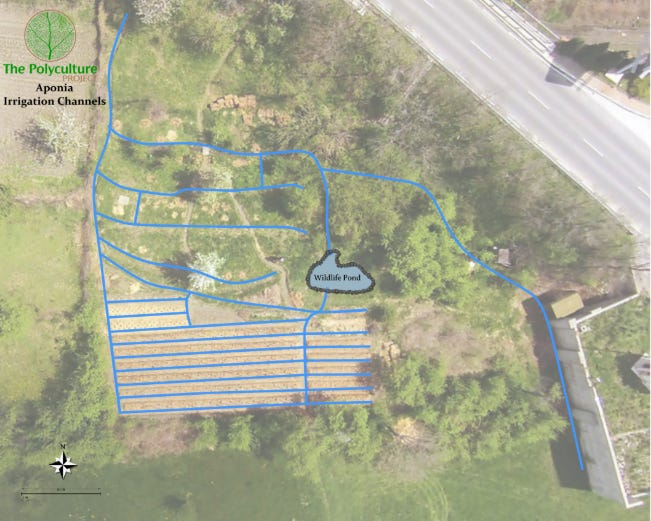
Our first step was to prevent further grazing on the plot and to better hydrate the soil by installing a network of simple channels dug into the soil and diverting water into the garden from the road runoff and then later from a nearby stream. We allowed the site to lay fallow for a season, and irrigated the land via the stream during the dry period of high summer. The below image shows the network of water channels used to irrigate the garden. We are fortunate to have access to a mountain stream that we can divert into the site sand we so this for 4 or 5 hrs once a week during the dry months July - September. The channels are more or less on contour, so the water flows very slowly and absorbs into the soil. We also use this water source to fill the wildlife pond during the summer months.
Site Habitat Map
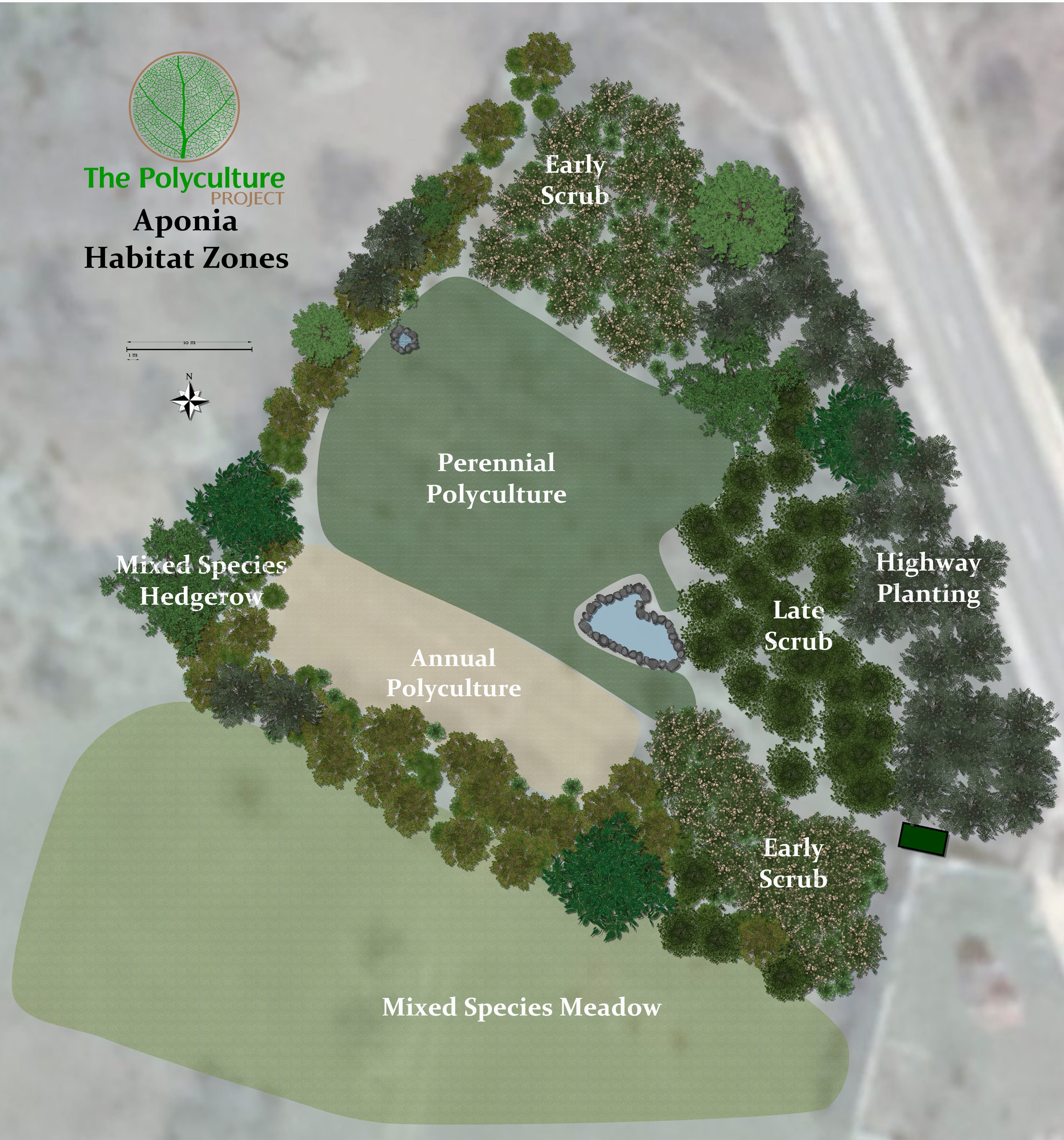
Our project mission is to develop and promote practices that can produce food and other resources for humans while enhancing biodiversity and for this garden we wanted to see how we can incorporate growing fruits, nuts, vegetables and nursery plants into the existing wild habitats. We include and encourage a variety of habitat into the landscape design, including native wild habitats (at various stages of succession) and cultivated habitats. The gardens are, essentially, a mosaic of habitat.
Garden Residents
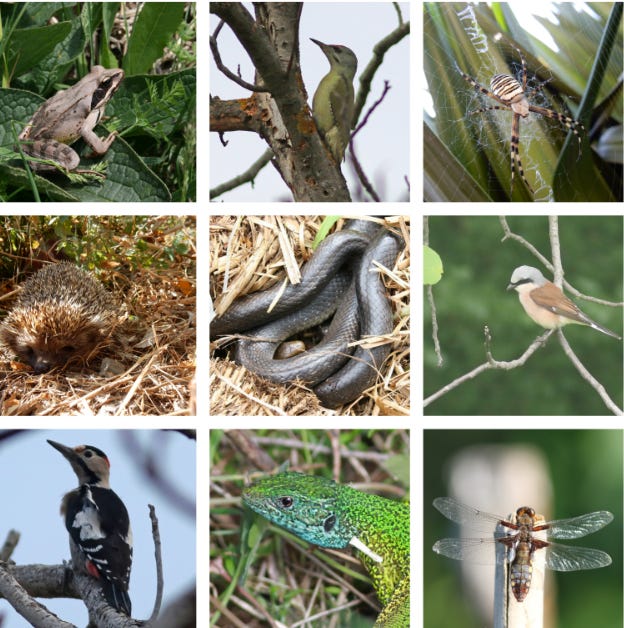
A range of reptiles, amphibians, birds, mammals and invertebrates reside or frequent the garden.
Garden Production
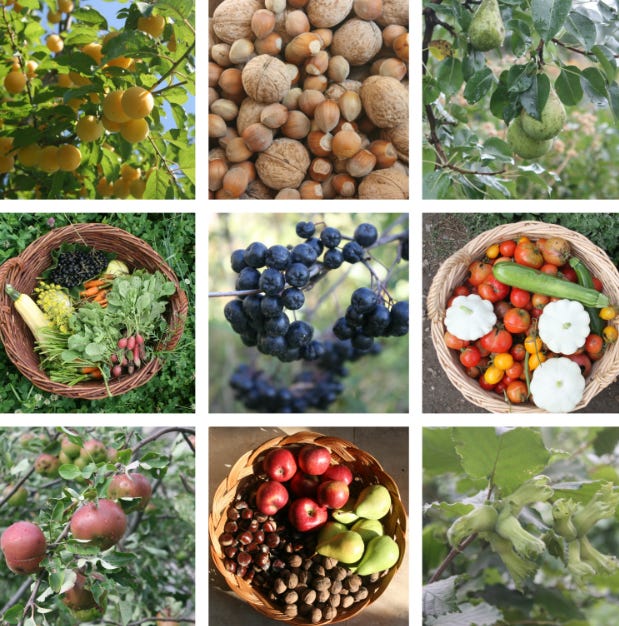
Five years into the garden and we now have a reliable and diverse source of food starting from April through to late November. At the moment we are mainly harvesting Asparagus officinalis - Asparagus , Allium tuberosum - Garlic Chives and wild salads such as Stellaria media - Chickweed and some herbs such as Foeniculum vulgare - Fennel and Origanum vulgare - Pot Marjoram. The photo below shows some of the fruits and nuts and vegetables that we have grown in the raised beds the last few years.
Aponia Plant Map
Here is an up to date illustration of the planting scheme in the garden.
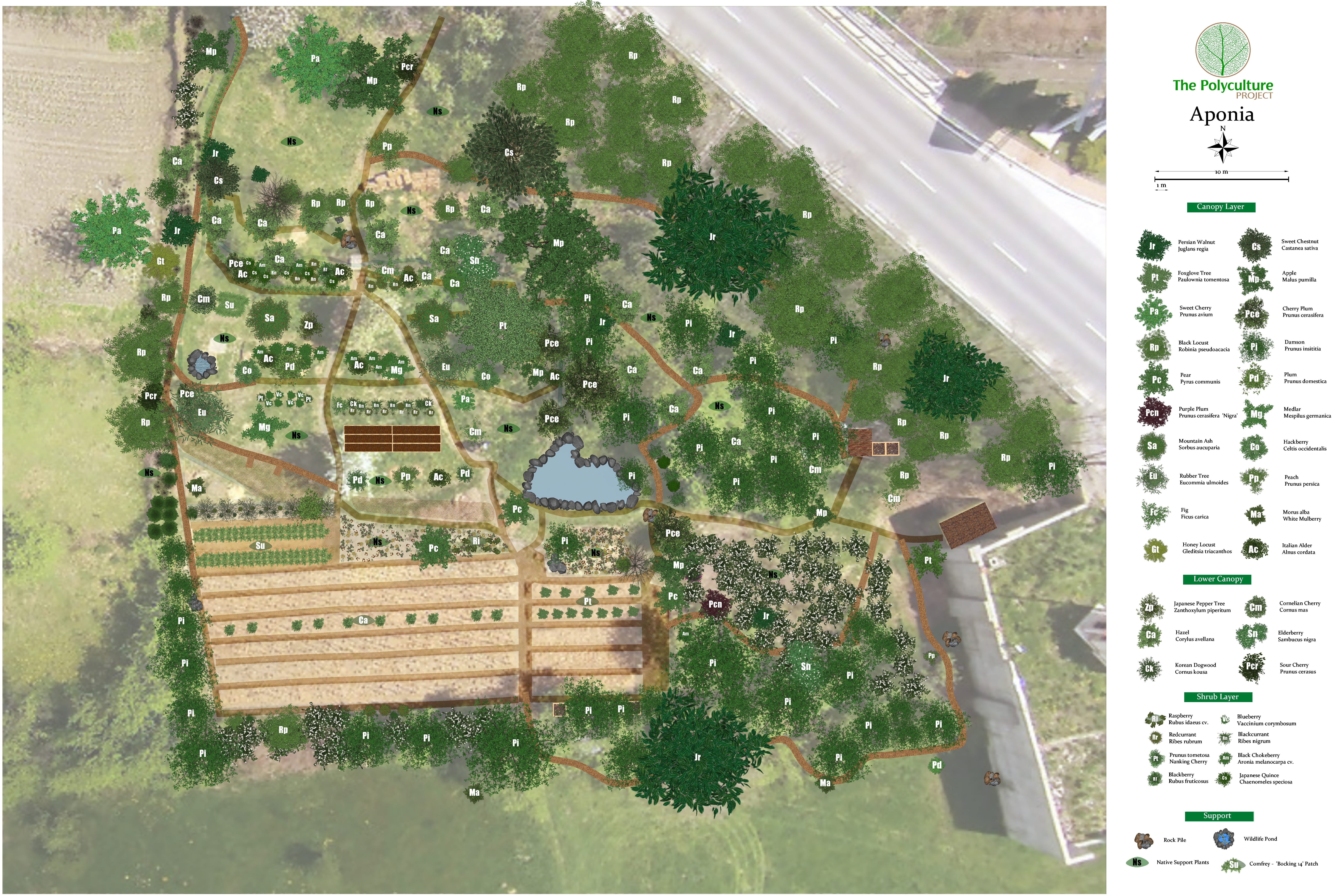
Polycultures within Polyculture
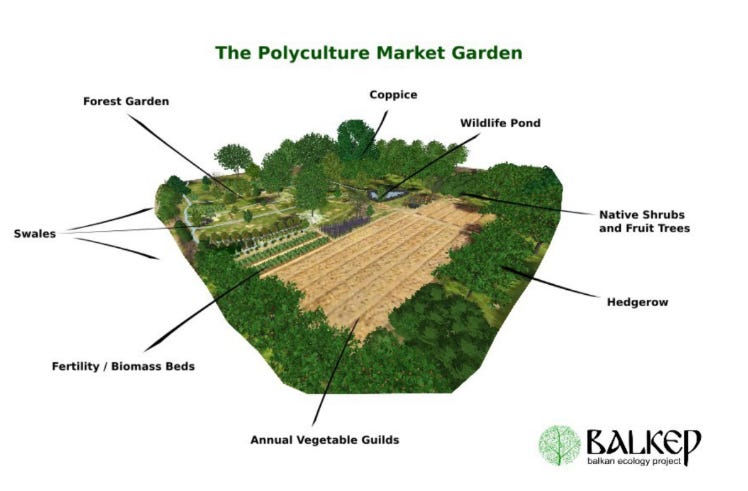
Within the polyculture garden we have a diverse range of smaller polycultures including perennial vegetable polyculture beds, annual polycultures, native hedgerows, a forest garden with perennial berry and fruit trees and biomass patches. We’ll be introducing these polycultures in detail in the later chapters.
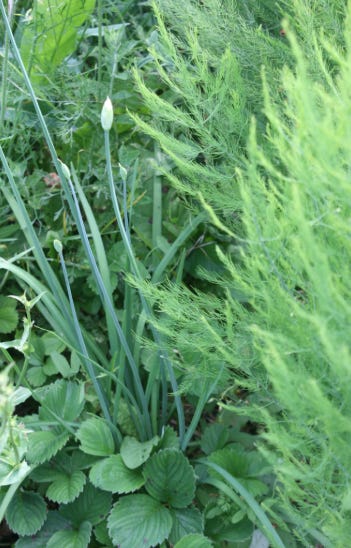
Perennial Vegetable Polyculture - Asparagus, Garlic Chives, Strawberry and native boundary plants.
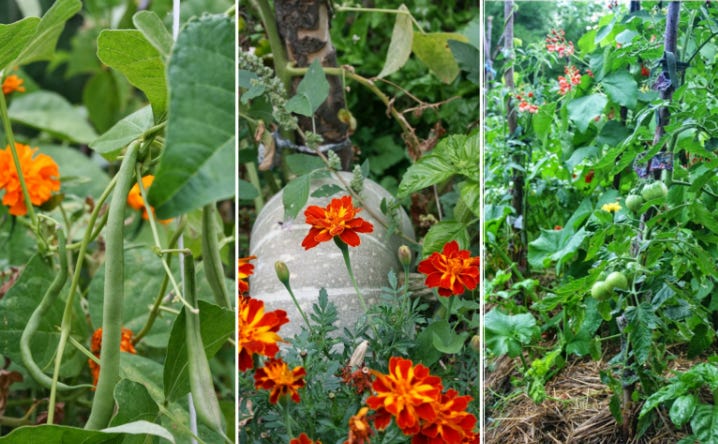
Annual Polycultures - We grow annual polycultures that include Tomato, Basil, Squash, Beans and Marigold in the raised beds of the garden with native plants grown in the pathways between the beds and around the bed edges.
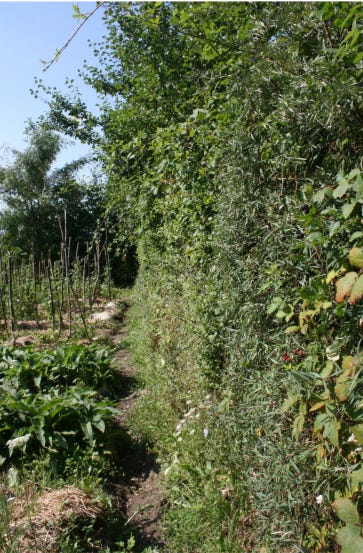
Native Hedgerow - Prunus insititia - Damson, Rubus spp. - Blackberry, Prunus cerasus - Sour Cherry, Robinia pseudoacacia - Black Locust and Corylus avellana - Hazelnut plants are used as hedging on the western boundary of the garden. The majority of these plants were transplanted from the area we cleared when making raised beds. The hedge provides excellent habitat for nesting birds, invertebrates and small mammals and produces a good quantity of berries and plums. We’ll need to top the hedge this season to keep the height manageable, and prevent it from casting too much shade in the vegetable garden.
Biomass Patches - We also have a number of polycultures in the garden to provide support to the crops, such as a biomass patches where we aim to grow mulch and fertilizer for the annual and perennial crops in the garden.
Welcome to our Online Store where you can find Forest Garden/ Permaculture plants, seeds, bulbs, and Polyculture multi-packs along with digital goods and services such as Online Courses, Webinars and eBooks. We hope you enjoy the store and find something you like. It’s your purchases that keep our Project going.
You can also find our full list of trees. shrubs and herbs for forest gardens on our nursery website.
How we Attempt to Meet the Qualities of Polyculture in Aponia
Biodiversity Enhancing - Provides long term habitat for wildlife and measurably enhances biodiversity
We attempt to enhance biodiversity in the gardens by providing a diversity of habitat. Our gardens are essentially a mosaic of habitat, these habitats include hedgerows composed of native trees, shrubs, and climbers, wildflower meadows that provide a succession of flowering throughout the season. The wildflowers provide food and shelter to a wide range of invertebrates that in turn provide food for birds, reptiles amphibians, and mammals. We also have patches of early and late scrub habitat which is basically emergent woodland in different stages. Furthermore, we layer our productive plants to mimic the wild habitat encouraging native plants to grow up in the cultivated areas of the forest garden and in our raised bed garden, and only disturb these plants to when they start to compete. We introduce a number of micro habitats into the garden such as rock piles, stick, and log piles and small wildlife ponds that attract a range of wildlife that help keep the pests in the gardens low.
Clean and Safe - Makes redundant the applications of pesticides - (fungicide, herbicide, insecticide) of organic or non-organic origin.
We do not use any types of fungicide, herbicide, insecticide, or proprietary fertilizers in the garden instead we rely on keeping the plants healthy, building good pest -predator relationships, and building fertile soils. With the intent to encourage wildlife, comes the risk of encouraging animals that may be dangerous for humans, for example, our region is inhabited by 2 species of venomous snakes. We’ve created fixed pathways throughout the garden that are kept clear by mowing so we can see where we are walking and avoid an encounter and we’ll always wear boots above our ankles in the garden and leather gloves when venturing into the undergrowth. We’ve not seen these venomous species or had any problems but it’s good to be aware of potential hazards when encouraging wildlife into a garden
Pleasurable Working Environment - Is pleasant to work in, user friendly and facilitates dignified work
The work in the garden is rhythmical to the seasons and diverse and I’d estimate that a family of 4 could manage this 2500m2 garden by spending an average of 2 hrs per week in the garden. Some tasks such as weeding a large perennial vegetable bed can be very tiresome for 1 person but with 2 or 3 it’s a relatively pleasant task. The bulk of the work involved once the garden matures is harvesting
Soil Building - Can show year on measurable increases of soil fertility (particularly soil organic matter and soil microbiology)
We build soil in the garden by keeping the soils well hydrated, sticking to fixed pathways so that we never need to tread on the soil and keeping the soil covered with mulches. We use old straw and apply this to the soils annually for the first 3 or 4 years and use biomass from the native plants as mulch that we chop and drop at regular intervals during the growing season. Growing plants in polycutures may also provide a diversity of feed for the soil microbiology, as the roots of the various plants secrete different exudates that soil microbes feed upon. These soil microbes provide a primary source of food for a whole web of soil organisms from microscopic protozoa to carnivorous centipedes that all contribute to providing fertility in the soils.
We build compost piles from time to time using the biomass from wild plants growing in the garden as well as animal manures imported from local farms for the raised beds when we are growing annual crops in them. We also include a range of nitrogen-fixing plants throughout all of the habitats that can fix a supply of biologically sourced nitrogen and encourage fungal organisms called mycorrhizae that are particularly good at providing an important plant nutrient, phosphorus.
Landscape Congruity - Takes advantage of site climatic and geographic properties in order to decrease energy and resource expenditure and has a positive impact on the aesthetic qualities of the landscape.
The way we have laid out the garden takes advantage of the slope to assist with irrigation in order to keep the soil well-hydrated year-round. Swales or berms and basins are establishes across the site where we direct water from a local stream. The berms fill with water and this water is drawn down into the soil via gravity and up into the soil via capillary action. We plant the majority of our fruiting shrubs and herbs on the berm where they can receive the most water and leave the basin to populate with wild plants that we use as chop and drop mulch for the plants on the berm. The garden layout is also positioned on a west-east axis in order to receive the maximum amount of sunlight and we have placed the tallest trees to the north to prevent shading the rest of the garden. Finally, we encourage climbers and tall-growing trees to establish in the Northern boundary of the property as these serve to protect the garden from the prevailing Northern winds that can be quite severe in our location.
Economic Viability - Can commercially and domestically be productive in relation to its cost, producing a reliable yield of healthy, affordable, marketable produce.
We’re growing a diversity of fruits and nuts and perennial vegetables and herbs for our consumption in the forest garden, growing plants that we sell from our nursery, and using the wild edible plants. We produce the majority of the biomass and fertility from the garden, and harvest wood from the early and late scrub habitats that we use to heat our home during the winter. We have in the past grown vegetables for a box scheme in the garden, but there is not a lot of local demand for this as many people here grow their own food or have relatives that do, or simply prefer to buy from the supermarkets where the prices are low. Growing annual crops is by far the most time-consuming activity, and given the time it takes to harvest and package the food, plus the delivery costs to get the food to where there is demand in the cities, it is not economically viable for us to pursue this activity commercially at the moment.
Next week I’ll be posting Part 1 of Chapter 2 - Organizing Polycultures
“If you have a garden and a library, you have everything you need” - Marcus Tullius Cicero 106 BC – 43 BC
Want to access the full course material right away, along with one-to-one consultation?
If you want to access the full course immediately and take advantage of 20 hours of direct, private consultancy, mentoring, and guidance focused entirely on your specific design project, you can register for the course here.
Why this is a major benefit for you:
Your project, your pace – We’ll move at the speed that works for your learning and design process.
Deep, tailored feedback – Every lesson can be directly related to your site, your challenges, your goals.
Live sessions on your demand – You don’t have to follow a fixed schedule. Whenever you feel you need a live session — to unblock a problem, review progress, or dive deeper into a topic — you simply request one, and we’ll find a convenient time.
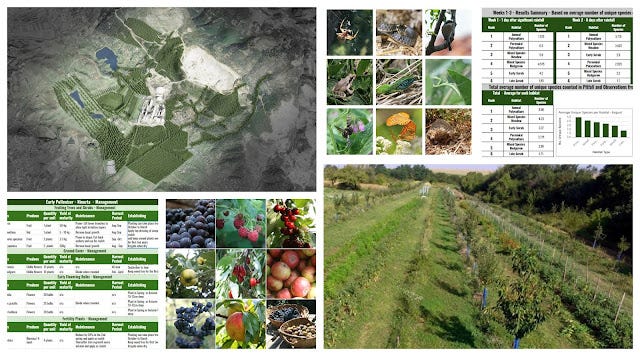
You’ll learn how to complete a professional regenerative landscape design and how to build and manage that design for yourself or for your design clients.
The payment structure includes a four-installment plan of 398 EUR per installment, as well as the option of a single payment of 1500 EUR.
When you enroll with a single payment (1500 EUR), we’ll reserve your place, you’ll receive the full course content, and you are free to book your 20 hours of one-to-one sessions at any time.
When you enroll with the installment plan, following payment we’ll reserve your place and send you the first quarter (5 lessons) of the course, and will release the next quarter following each subsequent installment payment. As soon as you get the material, you are welcome to request your 5 hours of one-to-one sessions.
You can register for the course here
Support Our Project
If you appreciate the work we are doing you can show your support in several ways.
Become a member of the Bloom Room with a $70 annual subscription to our Substack where you can access the content in our Regenerative Landscape Design Course , a member forum and more.
Make a purchase of plants or seeds from our Nursery or Online Store
Join us for one of our Onsite or Online Courses
Comment, like, and share our content. Sharing is caring !

We offer a diversity of plants and seeds for permaculture, forest gardens, and regenerative landscapes including a range of fruit and nut cultivars. We Deliver all over Europe from Nov - March. - Give a happy plant a happy home :)